For a number of years I’ve done a “wrap up” blog just before Christmas, and then a “welcome back” after Christmas. On a very personal level, this is somewhat symbolic - it lets me draw a line under the previous year, have a break and come back refreshed to think about what’s coming up for us at Gaia Resources in the next year. So it’s that time for a bit more crystal ball gazing.
To end last year, I wrapped up the blog with:
“2026 is lining up to be very interesting. We will see more work with our existing clients and a range of other projects that are lining up to kick off, including our new Digital Preservation courses and other initiatives that we recently announced. While I’m looking forward to the break, I’m also really looking forward to seeing where 2026 takes us!”
Indeed, 2026 is going to be an interesting year, not just here at Gaia but in the broader landscapes that we operate in.
In the Environment area that we work in, the environment protection reforms that were passed in December 2025 by our Federal government will bring changes. The development of Standards for Matters of National Environmental Significance and Environmental Offsets are coming through, and there will be stronger and more robust Environmental Impact Assessments run through the Federal government. At the State level here in Western Australia there are new guidelines coming out around Cumulative Impact Assessment that will also make a significant difference - looking to determine the cumulative effects of development proposals across areas.
Here at Gaia, we are already working with several clients that are improving the way that they manage their environmental data - especially the biodiversity components of it - to ensure that they’re ready for these changes. From undertaking basic “data health checks” to see if the way that organisations manage their data will be fit for purpose through to undertaking major redesigns and redevelopment of the data management methods in use already look to be a lot of our work in 2026 - but we’re keen to undertake even more of this work and help improve the way that these assessments are undertaken - so if you are looking for assistance in getting ready for these reforms, then get in touch with us.
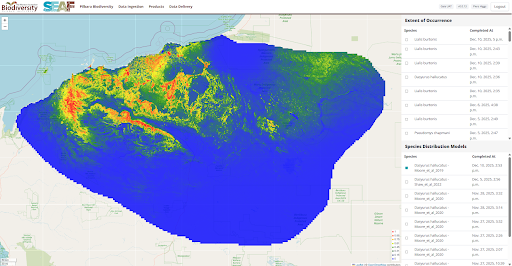
We will also be heavily involved in this area via the Western Australian Biodiversity Science Institute on the Shared Environmental Analytics Facility (SEAF) which also will be a significant part of the adaptation to the reforms for a range of organisations. This work is currently focused on operationalising a range of scientific models in the Pilbara, and will go into operational mode in the next few weeks for a range of organisations including mining companies and State and Federal Government departments. This will see some of the “grey data” that comes from unpublished biodiversity surveys being able to be used in these models for the first time - while also protecting the intellectual property concerns that have plagued the use of this for some time. We’ll be no doubt writing more on this over the next few months as we go live - but this project is one that I think makes a materially positive difference to the world we live in, and helps us accomplish our mission here at Gaia Resources.
Our Collections area will also see some significant things happen in 2026 for Gaia Resources, including the launch of our new Digital Preservation training courses and materials (as announced last year). We will be turning the “Duct Tape and Downloads” workshop that we presented at iPRES2025 and PARBICA in 2025 into both a paid, face to face and online training course, as well as releasing a range of the material as a free set of resources. If you’re interested in either, then get in touch with Jarrad (via email) and we’ll make sure you know when it all launches.
But there are also some changes regarding standards on the horizon more generally in the Collections space, which encompasses Museums, Herbaria, Archives, Libraries and Galleries.
Both myself and Mieke Strong have been volunteering with TDWG on helping to come up with a Sensitive Species Extension for Darwin Core, a standard that is heavily used in the sharing of data between biological collections (i.e. Museums and Herbaria). This should be coming out during the year, and we would encourage anyone who’s interested to get involved in the discussions. Hopefully this will go live in 2026 and we will be seeing restricted data being (carefully) shared with even better granularity about what is - and isn’t - in it!
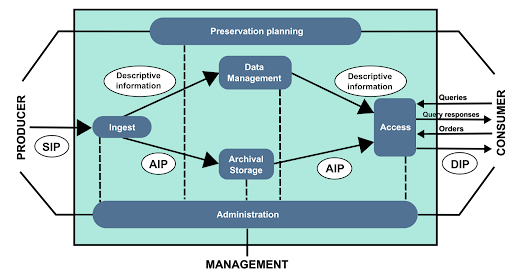
Another standard is also coming into play - Records in Contexts (RiC) - which is potentially an improvement for the way that Archives around the world describe and store their data. The Application Guidelines for the Records in Contexts (RiC) came out late in 2025, and we’ve been working through the crosswalks between RiC and the other Archival standards, and looking at what this means for the Australian institutions that we deal with, who use the Australian Series System (or Commonwealth Records Series system). We are working on several initiatives to see how these systems overlap and interplay - and look at how this would be implemented in the open source software that we work with in these areas, and especially how it would interact with the Open Archive Information System (i.e. how RiC will enable all the different components of the OAIS to be managed). We’ll be talking more about this in the coming months as well.
So as you can see, there’s a lot of things happening on our two main areas of Environment and Collections and we’ll be doing a range of things throughout 2026 - both as engagements and as some volunteer effort - to make sure that we continue to be able to provide the best value for our clients in a sustainable and responsible way.
As usual, I feel a lot more energised about what we can achieve in 2026, and as I mentioned last year, that’s down to the team that we have here at Gaia. It’s only five weeks out from our Team Week (where our team will assemble in Perth for the week of the 9th February) where we all get to spend some time together catching up and working collectively on our strategies, our projects and our functions - as well as having a bit of fun along the way. That is something to look forward to in the very near future!
So with 2025 setting a solid foundation for 2026, we’re ready to get stuck into the new year. So if if you have an idea for a project you want to discuss with us or just want to chat about something that is of interest to you - feel free to drop either Jarrad or myself an email, pick up the phone and call us on +61 8 9227 7309, or start a conversation with us on Facebook, Instagram or LinkedIn.
I look forward to seeing you in 2026!
Piers