The theme for this year’s United Nations International Day for Biodiversity on 22 May 2026 is ‘Acting locally for global impact’. To celebrate this day, we’ve handed the blog over to Gill White, one of our Consulting Scientists, to reflect on how the environmental data projects we deliver at Gaia Resources contribute to the United Nations’ work on biodiversity conservation.
Our core value at Gaia Resources is ‘make the world a better place’. This core value is embedded in our mission statement and in our business decisions: every potential new project is tested against the United Nations Sustainable Development Goals (UN SDGs).
Meeting global goals set by the UN is massive! I find this hugely inspiring and rewarding, and also, if I’m honest, a little overwhelming at times: how can my work, done from a tiny home-office in a corner of Australia, contribute to reversing the global loss of biodiversity? How does our local work fit into this global puzzle?
The UN International Day for Biodiversity on 22 May inspired me to dig a little deeper into the UN biodiversity commitments to see how they transform into on-ground action. Starting with the biggest piece of this jigsaw, the UN Convention on Biological Diversity (UN CBD) is an international treaty, adopted in May 1992, which aims to conserve biological diversity.
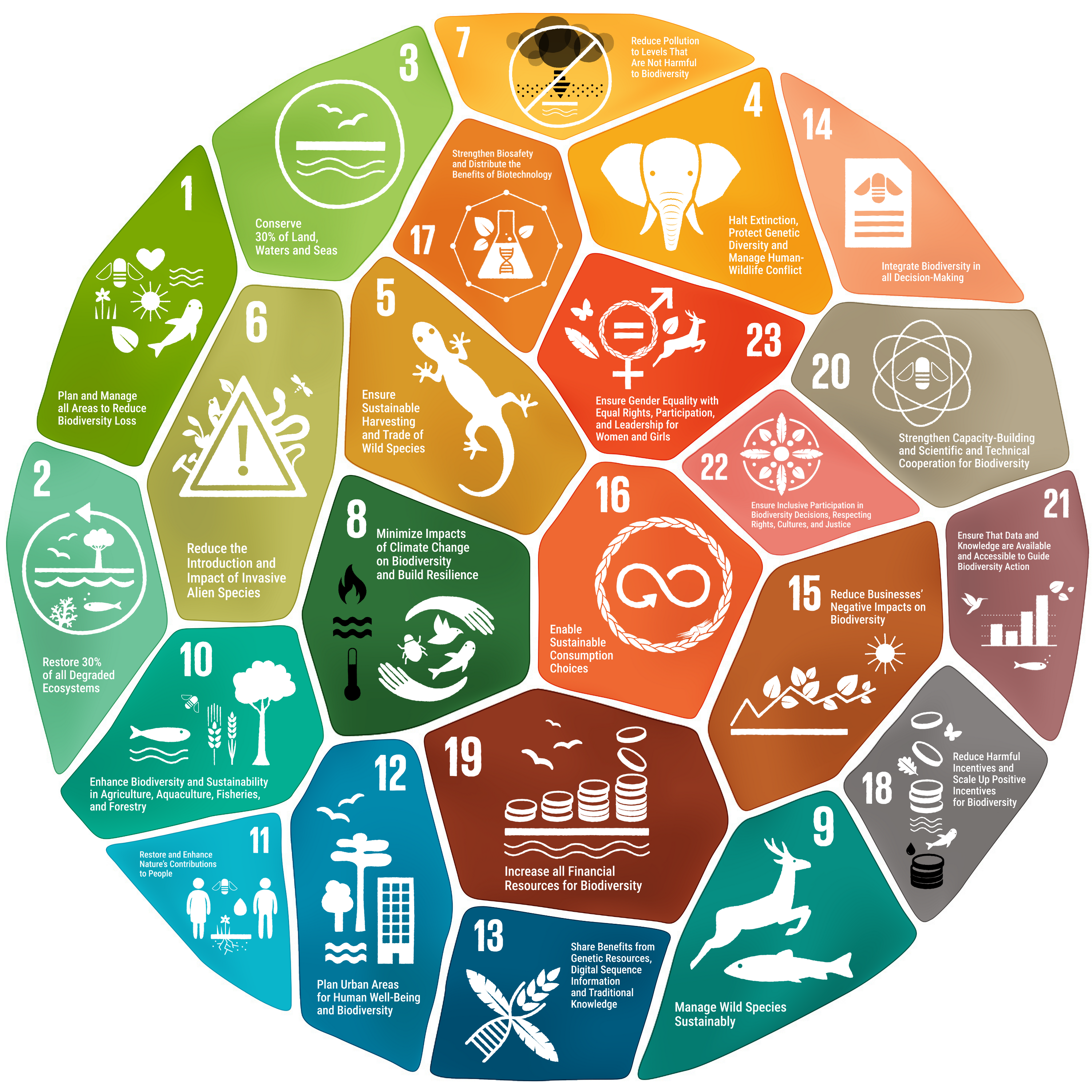
The treaty is supported by the UN Kunming-Montreal Global Biodiversity Framework (UN KMGBF), adopted in 2022. Also known as The Biodiversity Plan, the framework is designed to enable action to halt and reverse biodiversity loss, and to implement the objectives of the UN CBD. It sets four goals for 2050 and 23 targets for 2030, and supports all 17 of the UN SDGs (the relationship between the two sets of goals can be explored in this UN interactive tool).
The existence of an international treaty and global framework on biodiversity are truly awe-inspiring: imagine trying to get 100+ countries to agree on a single goal, let alone multiple goals and targets! But how does this actually help our plant and animal species that are facing multiple pressures like habitat loss, climate change and competition from non-native species?
I found the answer in this year’s theme for the International Day for Biodiversity: ‘Acting locally for global impact’. With this theme, the UN is highlighting the crucial role of local-scale action from individuals, community groups, businesses, local governments and state governments. Without this local-scale action, it won’t be possible to implement the national action plans developed by each participating country to achieve the goals and targets in the KM Global Biodiversity Framework.
In Australia, for example, the Strategy for Nature 2024–2030, and the associated Implementation Plan, set out the Australian government’s national targets under the KMGBF, and the plan for achieving them. The Strategy identifies three enablers that are crucial for achieving change, one of which is ‘Ensure environmental data and information are widely accessible and support decision-making’.
This is where Gaia Resources’ work on environmental data fits into this global jigsaw. We partner with businesses, state and territory governments and the national government to help them improve the flow, quality, storage and availability of environmental data that underpin decisions, many of which impact biodiversity.
Some examples of our work in this area include:
- At a local level, we work collaboratively with businesses and organisations, helping to improve their environmental data via database design, spatial support and data science services. For example, for the past four years we’ve partnered with the Western Australian Marine Science Institution, (WAMSI) to provide spatial support to the Westport program, including preparing and auditing spatial environmental data, producing map products to communicate with stakeholders, and managing multiple databases to maintain a reliable single source of truth for the data.
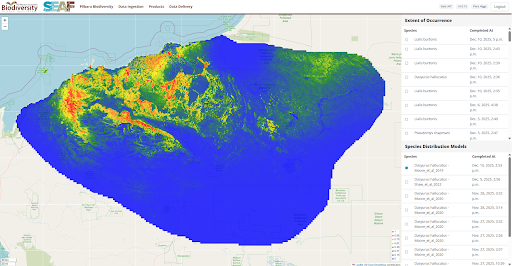
- At a regional level, we are working with the Western Australian Biodiversity Science Institute, and a range of industry partners, on the Pilbara Gateway of the Shared Environmental Analytics Facility (SEAF) which was launched publicly last week. This will allow industry partners to upload biodiversity survey data to secure private-zones, and generate scientific products (e.g. species distribution maps) from the collective pool of data from all partners, without sharing the raw data with each other. This will enable industry partners to assess cumulative environmental impacts (whilst still protecting commercially sensitive biodiversity data), leading to better outcomes for biodiversity across a region.
- At the state level, we partnered with the Western Australian Biodiversity Information Office to deliver the state’s biodiversity data platform (Dandjoo) which provides open access to high-quality curated biodiversity data.
- Nationally, we worked with the Australian government to review and transform environmental data from states and territories for the Australian Biodiversity Data Repository (BDR). The BDR is an important element in Australia’s Strategy for Nature 2024–2030; it aims to make environmental data available to government, businesses and the public across the whole country to underpin decisions about biodiversity protection and ecosystem restoration.
I’ve had the privilege of working on several of these projects, partnering with amazing clients who are committed to improving their environmental data management. Reflecting on the theme ‘Acting locally for global impact’, I am incredibly proud of the work we do at Gaia Resources and the clients we partner with. Together we contribute critical improvements to the environmental data that supports decisions about biodiversity, and in doing so, we contribute to global efforts to conserve biodiversity.
If you'd like to explore how Gaia Resources can help you improve the management, quality and availability of your environmental data, please send us an email or start a conversation with us on LinkedIn, Facebook or Instagram.
Gill